
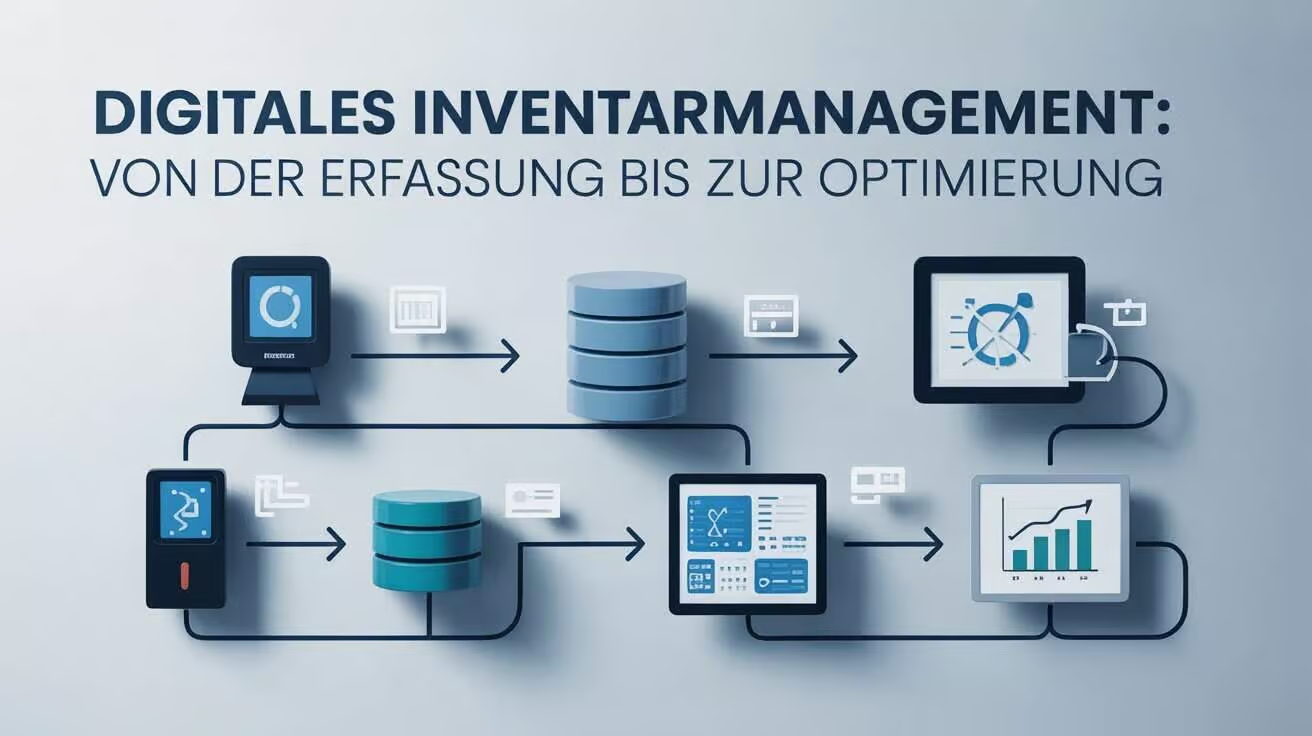
Digital inventory management is like the heartbeat of a company that wants to manage its resources efficiently. In a world where time is money and every mistake can be costly, precise Inventory Management essential. But what exactly is behind this term?
Tip: Invest in good Inventory software, to keep track of your inventory. This can help you avoid bottlenecks and reduce overstock.
A common misconception is that digital inventory management is only relevant for large companies. In fact, small and medium-sized enterprises (SMEs) also benefit enormously from an effective software solution for Inventory Management. These systems not only offer a precise overview of the current stock levels but also support the planning of future orders.
In summary, digital inventory management is much more than just counting products in the warehouse. It's about making strategic decisions based on sound data and ultimately increasing your company's efficiency. If you are ready to take the leap into the digital age, then you are well on your way to optimizing your inventory management!
What is inventory management?
Inventory management is like the heartbeat of a company, ensuring that everything runs smoothly. It includes planning, controlling, and monitoring the entire inventory – from procurement to storage and finally to sale. But what exactly is behind this term?
Definition and significance
Inventory management refers to the processes and systems that companies use to manage their inventory efficiently. This includes both physical warehousing and digital inventory management. Effective Inventory Management helps to minimize costs, improve customer service, and ultimately increase profits.
Differences between the terms: inventory management, stock management, and warehouse management
Although these terms are often used interchangeably, there are subtle differences:
- Inventory Management: Focuses on the recording and monitoring of physical inventory.
- Inventory Management: Refers to strategic decisions for optimizing inventory levels.
- Warehouse Management: Encompasses the logistical side of warehousing, including the arrangement and movement of goods within the warehouse.
Tip: The combination of these approaches leads to a comprehensive inventory management strategy that ensures both efficiency and accuracy.
Significance in the modern business world
In an era where real-time data analysis and automation play an increasingly important role, inventory management becomes even more crucial. Companies are increasingly relying on digital solutions such as ERP systems or inventory software to optimize their processes. These systems not only enable more precise inventory tracking but also faster responses to market changes.
Implementing efficient inventory management can reduce operating costs by up to 30%.
In short: Well-thought-out inventory management is not just a nice-to-have – it's a must for any company that wants to survive in today's competitive landscape. Cutting corners here risks not only financial losses but also a poor reputation with customers.
The Role of Software in Inventory Management
Software solutions are the core of effective Inventory Management. They transform the often chaotic world of inventory into an organized system that helps companies optimize their resources. But how exactly does software contribute to improving Inventory Management ? Let's take a closer look.
Inventory software and its functions
Modern Inventory software offers a variety of functions that go far beyond simple inventory recording. Here are some of the most important features:
- Real-time data analysis: With real-time inventory control, companies can react immediately to changes in stock levels.
- Automated Inventory: Automated processes significantly reduce the effort required for manual data entry.
- Inventory Control: The software enables precise monitoring of inventory levels, preventing shortages or overstocking.
Advantages of warehouse management software and logistics software
Warehouse management software and Logistics software not only offer a platform for inventory management but also crucial benefits for the entire supply chain:
- Cost reduction: Optimized processes allow companies to achieve significant cost savings.
- Time Savings: Automation considerably reduces the time spent on manual tasks.
- Better decision-making: Data analyses help managers make informed decisions based on accurate inventory information.
Real-time inventory control through modern systems
Real-time inventory control is a must nowadays. Thanks to advanced technologies like RFID tracking solutions, companies can monitor their stock levels in real-time. This means:
- Fast Response Times: Problems are identified immediately and can be resolved promptly.
- Better planning: With accurate data on current inventory levels, companies can better plan their orders and avoid stockouts.
- Increase Customer Satisfaction: A precise overview of inventory levels ensures product availability, which in turn increases customer satisfaction.
Tip: Invest in an integrated inventory management system that covers all aspects of inventory management – from purchasing to delivery. This ensures that your processes seamlessly integrate!
Ultimately, the role of software in inventory management should not be underestimated. The right solutions enable companies to manage their resources efficiently while reducing costs. So, if you haven't switched to digital solutions yet, now might be the perfect time!
Process of inventory recording and management
The Inventory recording and management is the core of effective Inventory Management. This involves keeping an overview of all available resources and ensuring that inventory levels are always optimally managed. But how does this process work exactly?
Methods of inventory recording: manual vs. automated
Traditionally, inventory recording was done manually. This means that employees regularly walk through the warehouse to count and record stock. However, this method can be time-consuming and prone to errors. In contrast, automated systems enable faster and more accurate recording.
Tip: The use of automated solutions such as barcode scanners or RFID tracking can significantly increase efficiency and minimize errors.
Use of RFID tracking solutions for SMEs in Germany
RFID trackingSolutions are revolutionizing the way small and medium-sized enterprises (SMEs) in Germany manage their inventory. This technology enables real-time tracking of goods, which not only increases accuracy but also drastically reduces the time for inventory taking.
Importance of inventory taking for Enterprise Resource Planning (ERP)
Precise inventory taking is crucial for Enterprise Resource Planning (ERP). It provides important data that can be integrated into the ERP system to make informed decisions. Well-managed inventory management ensures that companies can use their resources efficiently.
The integration of precise inventory data into ERP systems not only improves planning but also overall supply chain efficiency.
In summary, a well-thought-out process of inventory recording and management is crucial for a company's success. By using modern technologies, companies can not only increase their efficiency but also reduce their costs and ultimately enhance their competitiveness.
Optimization of inventory management
Optimizing inventory management is like fine-tuning a precision instrument; it requires skill, planning, and a touch of technology. If your stock is not optimally managed, it can lead to overstocking or shortages, which ultimately affect your efficiency and profitability. Here are some proven strategies for inventory optimization and control.
Strategies for inventory optimization
- ABC Analysis: Categorize your items into three groups: A (valuable), B (moderately valuable), and C (less valuable). This helps you focus on the most important products.
- Just-in-Time (JIT) Inventory Management: Minimize inventory by ordering only what you need, exactly when you need it. This allows you to save costs and use space efficiently.
- Seasonal Adjustments: Consider seasonal demand fluctuations when planning your inventory. A flexible system can help you avoid overstocking during the off-season.
Inventory control and its impact on efficiency
Effective inventory control is crucial for the smooth functioning of any business. By using modern technologies such as RFID tracking solutions, companies can monitor and control their inventory in real-time. This leads not only to improved accuracy in inventory recording but also to faster response times to changes in demand.
Tip: Implement automated systems for inventory monitoring. These systems can help you identify bottlenecks early and take timely action.
Resource management in the context of Supply Chain Management (SCM)
The interplay between inventory management and Supply Chain Management (SCM) is crucial for a company's overall success. Seamless integration of these two areas can not only increase efficiency but also significantly reduce costs. Here are some aspects that can help:
- Real-time data analysis: Utilize data analysis tools to monitor supplier performance and optimize your supply chain in real-time.
- Supplier Collaboration: Work closely with your suppliers to ensure transparent communication regarding orders and stock levels.
- Sustainable Practices: Implement sustainable practices in resource management to achieve both ecological and economic benefits.
By applying these strategies, companies can significantly improve their inventory management. Remember: it's not just about what's in the warehouse; it's about how efficiently those resources can be utilized!
Best practices for digital inventory management
In the world of Inventory Management there are some proven practices that can help companies optimize their processes and keep track of their Inventory to keep. Here are the best tips you can implement immediately:
-
-
Workflow optimization in warehouse operations
A smooth workflow is the be-all and end-all in Warehouse Management. Review your existing processes and identify bottlenecks or inefficient steps. A good example is the implementation of automated warehousing systems that reduce manual tasks and minimize errors.
-
Criteria for selecting a suitable inventory tracking system
The choice of the right Inventory software can be crucial. Pay attention to the following criteria:
- Real-time Inventory Control: This allows you to always keep an overview of your stock.
- User-Friendliness: An intuitive user interface simplifies employee training.
- Integration with Other Systems: Your new system should seamlessly integrate with existing ERP or SCM solutions.
-
Importance of employee training in handling new systems
Even the best system can fail if your employees don't know how to use it correctly. Invest in training and workshops to ensure that all stakeholders are familiar with the new software. This not only promotes acceptance but also increases efficiency throughout the company.
-
Tip: Use gamification elements during training to make learning more fun!
Implementing these best practices will not only increase your efficiency but also revolutionize your entire inventory management. Remember: well-managed inventory management is not a one-time project, but an ongoing process of continuous improvement!
Statistics show that companies with optimized inventory management can reduce their warehousing costs by up to 30%.
Future trends in digital inventory management
The world of Inventory Management is constantly evolving, and there are some exciting trends that companies should keep an eye on in 2025. Here are the key developments that could revolutionize Inventory Management :
-
-
Use of AI and machine learning in warehouse logistics
Artificial intelligence (AI) and machine learning are no longer just buzzwords; they are changing the way companies manage their inventory. By using intelligent algorithms, companies can make predictions about future orders, thus avoiding overstocking or shortages. This means less money tied up in inventory and more flexibility.
-
Future of automated warehousing systems
Automated warehousing systems are on the rise. These systems use robots and drones for efficient management of goods flows. Imagine a robot bringing you the items you need while you enjoy your coffee – that's the future of warehouse logistics! Companies like Amazon are already using such technologies to increase their efficiency.
-
Trends in materials management and their influence on inventory management
Material management is becoming increasingly sustainable. Companies are integrating environmentally friendly practices into their supply chains, which also affects their inventory management. Better planning and control of inventory can not only save costs but also reduce the ecological footprint.
-
According to a study by McKinsey, the use of AI in supply chain management could save up to 30% of operating costs.
These trends clearly show that digital inventory management is not standing still. Companies should be prepared to adapt and integrate new technologies to remain competitive.
Conclusion: The importance of effective digital inventory management for companies
In today's business world, effective inventory management is no longer just a nice extra feature, but a necessity. Companies that neglect their Inventory Management run the risk of drowning in a sea of inefficient processes and high costs.
Imagine you run a restaurant. If your Warehouse Management is not up-to-date and you don't know how much of your popular ingredients are left, you risk not only customer satisfaction but also valuable revenue. Effective digital inventory management allows you to monitor the Inventory in real-time and make informed decisions.
Tip: Utilize modern technologies such as RFID tracking solutions or automated warehousing systems to optimize your processes and minimize sources of error.
Benefits of effective inventory management
- Cost reduction: Through precise inventory control, companies avoid overstocking and bottlenecks.
- Increased efficiency: Automated systems reduce manual intervention and speed up warehouse logistics.
- Better decision-making: Data analyses enable predictive planning within Supply Chain Management (SCM).
Avoid critical mistakes
One of the most common mistakes in inventory management is underestimating the importance of thorough employee training. If your teams are not familiar with the latest technologies, even the best system will not deliver the desired results. Invest in training and regular workshops.
Looking into the future
Future trends indicate that AI and machine learning will play an even greater role in digital inventory management. These technologies will enable companies to further optimize their processes and adapt to market changes.
In summary: Thoughtful digital inventory management is crucial for the success of modern companies. It not only improves efficiency and reduces costs, but also ensures that you are always one step ahead – whether in warehouse logistics or asset management.
