providers

CAFM-Blog.de | CMMS Explained: How Modern Maintenance Systems Reduce Downtime

CMMS explained: How modern maintenance systems reduce downtime

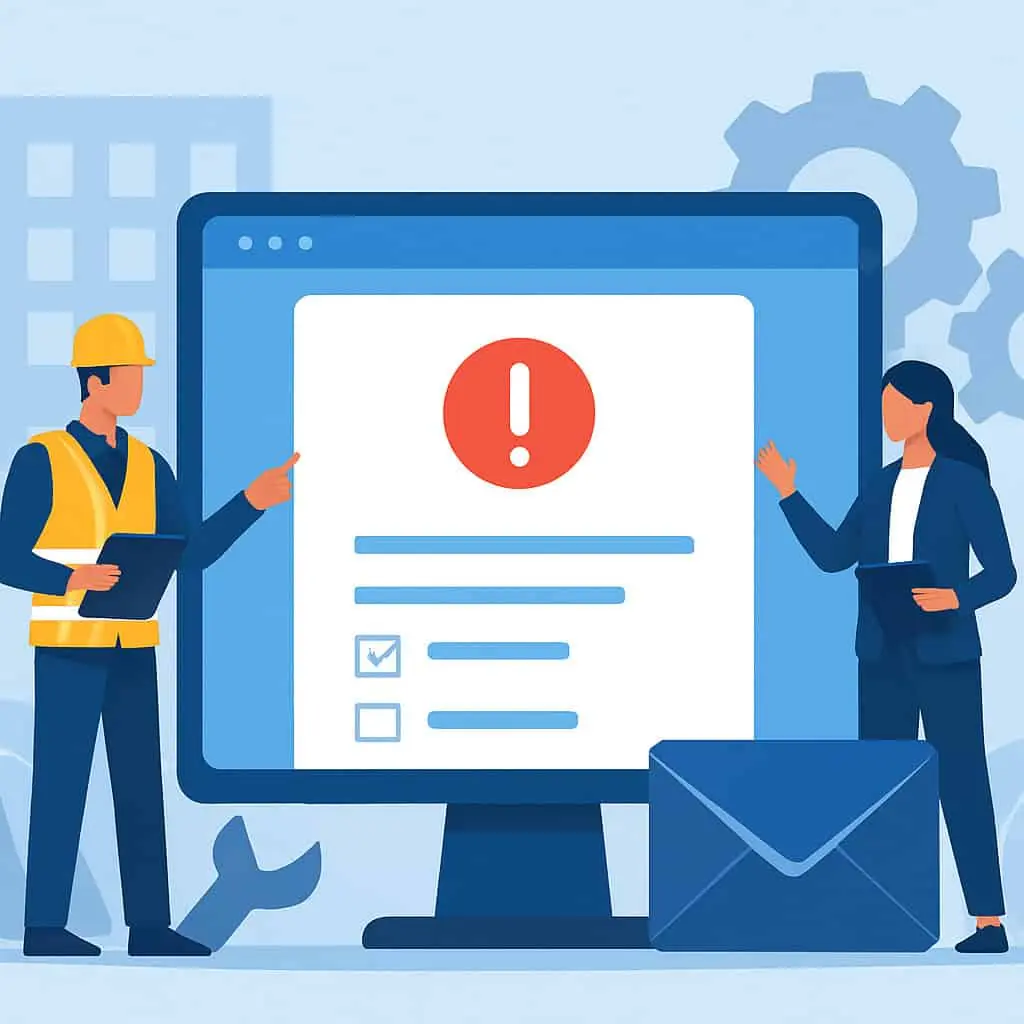
Downtime in industry and facility management are real money losers. Modern Computerized Maintenance Management Systems (CMMS) promise a remedy here and bring order to the daily chaos. In practice, a good CMMS is far more than just a digital software list for maintenance appointments. It functions as a central nervous system where work orders, inventory, and the entire maintenance history converge comprehensibly. Many companies are finally replacing their isolated Excel spreadsheets with these systems and creating […]

CMMS explained: How modern maintenance systems reduce downtime Read more »
CAFM-Blog.de | CAFM Software is Indispensable — Despite All Resistance

CAFM software is indispensable — despite all resistance

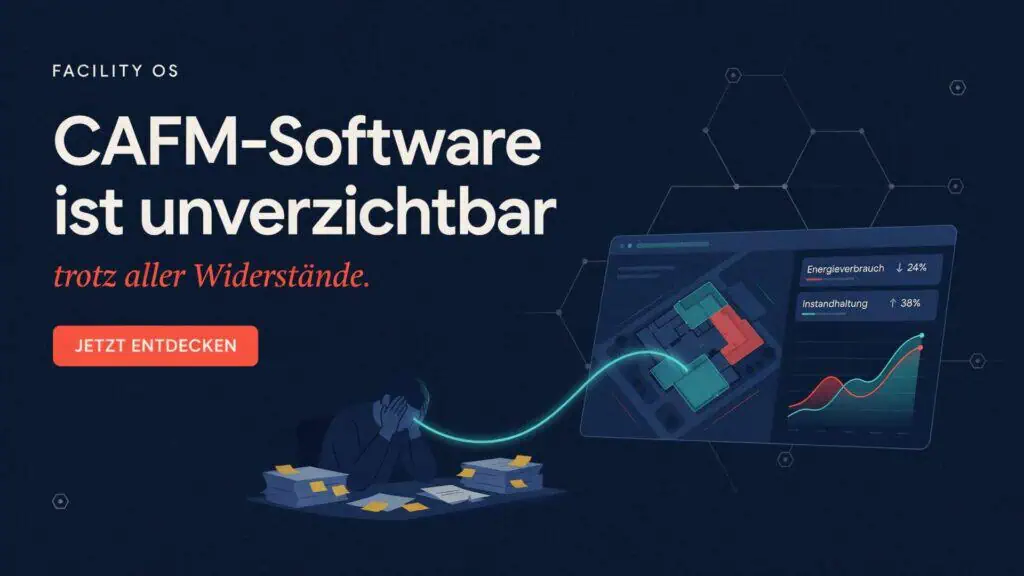
TL;DR: CAFM software (Computer-Aided Facility Management) demonstrably increases efficiency in building operations — reduces operating costs, minimizes downtime, and creates transparency across areas, maintenance cycles, and resources. Nevertheless, the implementation fails in many organizations not because of the technology, but due to institutional stubbornness, data anxiety, and the underestimated influence of Mr. Krause from building services. Let me start with a statement that I will immediately regret: The skeptics are not always wrong. CAFM systems are

CAFM software is indispensable — despite all resistance Read more »

CAFM-Blog.de | IWMS vs. CAFM: When an Integrated Workplace Management System is Worth It

IWMS vs. CAFM: When an Integrated Workplace Management System is Worthwhile

When deciding between classic CAFM and a fully integrated solution, the question frequently arises whether an IWMS justifies the additional effort. This article provides clear decision rules, quantifiable criteria, and typical cost and ROI parameters, and shows when an integrated Workplace Management System makes economic sense for space management, energy consumption optimization, and integrations with HR, ERP, and BMS. At the end, you will find an actionable checklist for evaluation, piloting, and implementation. Key message for decision-makers Key message: An IWMS is worthwhile

IWMS vs. CAFM: When an Integrated Workplace Management System is Worthwhile Read more »

CAFM-Blog.de | Our AI is Already Optimizing Building Operations, Right?

Our AI is already optimizing building operations, right?

AI in facility management works excellently. At least as long as you don't look too closely at the data it's actually based on. Welcome to the German CAFM market 2026. A market where artificial intelligence is now ubiquitous — at least in presentations, product brochures, and strategy papers. Buildings are no longer operated there, but "intelligently controlled." Systems no longer document, they "learn." And data no longer simply becomes information, but "insights." How nice… In real operation

Our AI is already optimizing building operations, right? Read more »

CAFM-Blog.de | What CAFM Software Has to Do With Stockholm

What CAFM software has to do with Stockholm

The German market for CAFM and IWMS software is currently undergoing a fascinating phase of transformation, which from the outside looks like a state-of-the-art digitalization miracle. The industry is consolidating at an acceptable pace, driven by private equity investors and (more or less) large player mergers. At the glossy presentations of industry events, the song of unlimited possibilities is sung, garnished with terms like Artificial Intelligence, Predictive Maintenance, and seamless integration (I find this term strange, by the way, but

What CAFM software has to do with Stockholm Read more »

CAFM-Blog.de | CAFM: Niche in a Billion-Dollar Market

CAFM: Niche in a Billion-Euro Environment

The German FM market operates in a size range of well over 80 to 90 billion euros in annual revenue and is growing moderately, somewhere around 3 percent per year. CAFM software and related solutions occupy a comparatively small but strategic niche within this – typically, pure software and SaaS revenue for Germany is located in the low to mid triple-digit million range, supplemented by consulting, implementation, and managed services. This is attractive to investors because

CAFM: Niche in a Billion-Euro Environment Read more »

CAFM-Blog.de | CAFM Data Graveyards: Not a Software Problem, But an Organizational Problem

CAFM Data Graveyards: Not a Software Problem, but an Organizational Problem

In facility management, we like to talk about digitalization, CAFM, IWMS, and the 'digital twin.' We less like to talk about how we actually handle our data. And that's precisely the problem. We don't have a software problem in the CAFM environment. We have an organizational and cultural problem in handling data. The nice narrative: Everything integrated, everything available When you look at presentations from CAFM and IWMS providers, our world actually sounds simple: Seamless

CAFM Data Graveyards: Not a Software Problem, but an Organizational Problem Read more »

CAFM-Blog.de | IWMS vs. CAFM: When an IWMS Makes Sense and What Benefits It Offers

IWMS vs. CAFM: When an IWMS Makes Sense and What Benefits It Offers

When portfolios grow and locations are globally distributed, CAFM is often no longer sufficient – then an IWMS becomes relevant. A fundamental distinction begins in the daily operations of the FM organization. IWMS refers to an integrated platform that combines real estate, asset management, maintenance, space management, and sustainability in a common database, often requiring ERP integration. CAFM, on the other hand, remains predominantly operationally oriented: space planning, maintenance, simple asset management, and room resource optimization, typically without deep enterprise integration (although the boundaries

IWMS vs. CAFM: When an IWMS Makes Sense and What Benefits It Offers Read more »

CAFM-Blog.de | CAFM Replacement: The Holy Grail You Must First Dig Out of a Data Graveyard

CAFM Replacement: the holy grail that must first be dug out of a data graveyard

There are few projects in facility management that are as reliably romanticized as replacing a CAFM system. On paper, it always sounds wonderfully simple: old system out, new system in, migrate data, modernize processes, everyone happy, operations more efficient, reporting cleaner, users enthusiastic, management impressed. In practice, this is about as realistic as the idea that you can clear out a cluttered basement by simply

CAFM Replacement: the holy grail that must first be dug out of a data graveyard Read more »

CAFM-Blog.de | CAFM Strategy: Cloud, On-Premise, and the harsh reality of operating costs

CAFM Strategy: Cloud, On-Premise, and the Harsh Reality of Operating Costs

When looking at the CAFM market in the DACH region, a curious picture often emerges: glossy brochures show drones flying through virtual BIM models, algorithms predict the wear and tear of chillers down to the minute, and all of this, of course, happens 'in the cloud'. But when you then stand in the boiler room of a public building, have no mobile network, and the local ERP system only accepts CSV files from the late 90s, reality quickly catches up. As

CAFM Strategy: Cloud, On-Premise, and the Harsh Reality of Operating Costs Read more »

CAFM-Blog.de | Energy Management Software: Benefits and CAFM Integration

Energy Management Software: Benefits and CAFM Integration

With Energy Management Software ("EMS"), potentials for energy savings in building operations can be specifically identified and utilized. This article shows how to transform consumption data from meters and sub-meters into a reliable ROI story and integrate it seamlessly into a CAFM environment. We outline clear selection criteria, a practical implementation roadmap, and key performance indicators (KPIs) to measure success. We have also found a few practical examples. Energy Management Software in the CAFM Context: Benefits and Goals Energy management software makes the

Energy Management Software: Benefits and CAFM Integration Read more »

CAFM-Blog.de | Energy Management Software: Identifying and Measuring Savings Potential

Energy Management Software: Identifying and Measuring Savings Potentials

With Energy Management Software (EMS), consumption data from CAFM, BMS, and smart metering can be consolidated, and savings potentials can be systematically uncovered. This guide shows concrete steps for data integration, the application of IPMVP and ISO 50015 methods, relevant KPIs, and a simple ROI calculation, so that you can prioritize measures and report savings reliably. Why Energy Management Software is a Central Tool for Facility Management Key Takeaway: EMS shifts Facility Management from reactive operations to ongoing operational control

Energy Management Software: Identifying and Measuring Savings Potentials Read more »

CAFM-Blog.de | Ticketing Systems in Facility Management: Setting Up Efficient Fault Reporting and Processes

Ticket Systems in Facility Management: Setting Up Efficient Fault Reporting and Processes

Fragmented fault reports delay responses and drive up costs; central ticket systems create transparency, traceability, and lower MTTR. This guide shows which functional requirements and integrations with CAFM, BMS, and IoT are necessary, how to design processes with SLA and escalation logic, and which KPIs you should measure. You will receive concrete process templates, implementation steps, and a go-live checklist for practical use. Why Ticket Systems Provide Measurable Added Value in Facility Management Clear Result: Ticket systems reduce actual response times and

Ticket Systems in Facility Management: Setting Up Efficient Fault Reporting and Processes Read more »

CAFM-Blog.de | IT Ticketing for FM in 11 Points [Best Practice & Implementation]

IT Ticketing for FM in 11 Points [Best Practice & Implementation]

Facility teams must handle disruptions, maintenance orders, and service requests quickly, traceably, and with little friction between IT and CAFM systems. An IT ticketing system can achieve this if it is correctly integrated, linked with asset and room data, and made available on mobile devices. This guide provides concrete architecture and workflow specifications, migration steps, KPI metrics, and practical provider examples, so you can plan selection, piloting, and rollout effectively. 1. Why an IT Ticketing System Specifically for Facility Teams Creates Added Value Core Claim: A

IT Ticketing for FM in 11 Points [Best Practice & Implementation] Read more »

CAFM-Blog.de | Comparing BIM Software: Which Tools Are Suitable for Facility Management?

BIM Software Comparison: Which Tools Are Suitable for Facility Management?

In Facility Management, the 3D appearance isn't what counts, but whether models can be reliably transferred to CAFM and used in operations. This comparison shows which BIM software is convincing in practical matters like IFC/COBie export, attribute mapping, API integration, and QA workflows – and where common integration pitfalls lie. You will receive concrete tool profiles, proven implementation paths, and an RFP checklist to technically vet providers and limit integration risks. BIM Value Drivers for Facility Management Key Message: The economic leverage of BIM software for

BIM Software Comparison: Which Tools Are Suitable for Facility Management? Read more »

Scroll to Top